
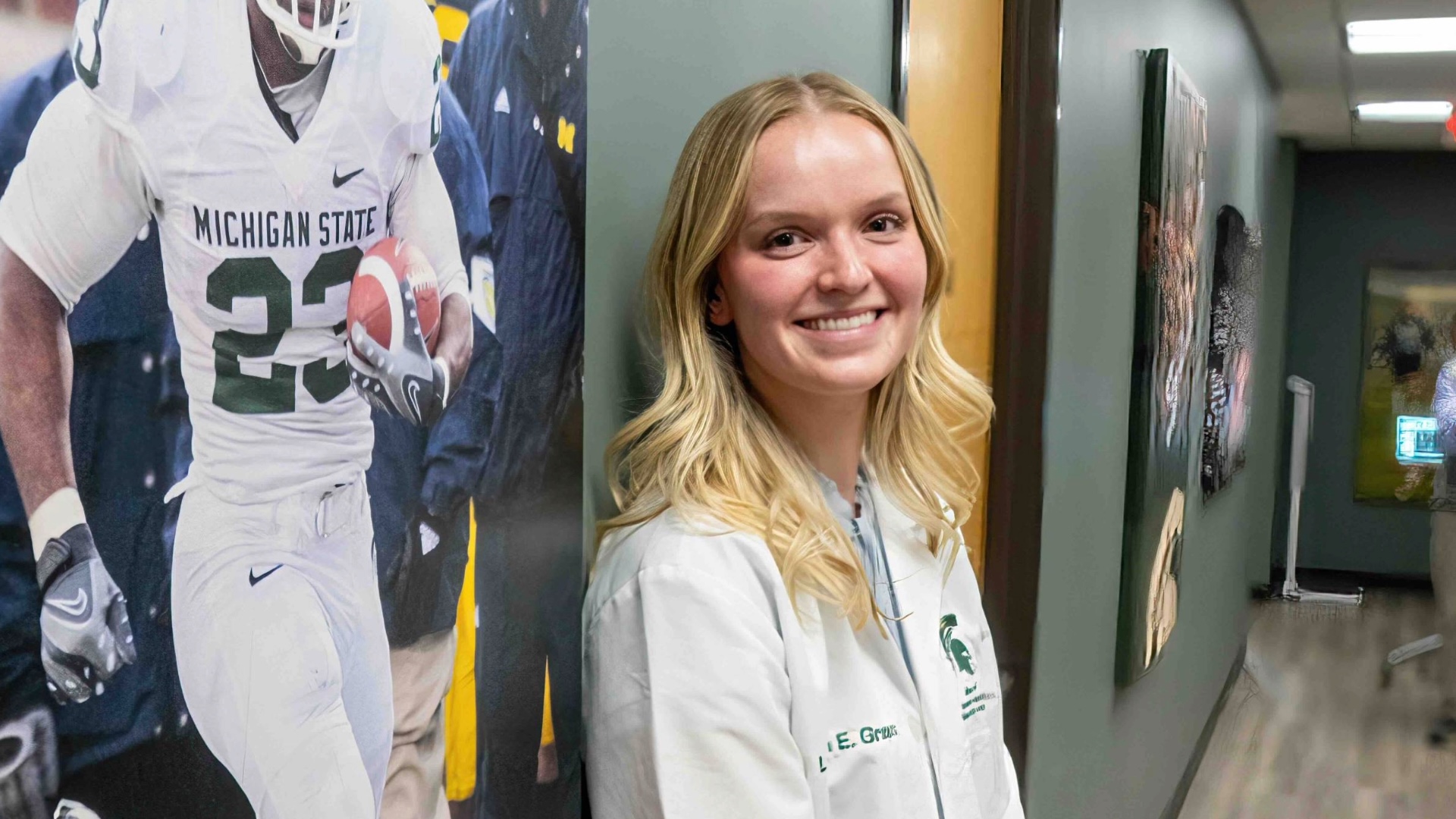
The Michigan State University College of Osteopathic Medicine (MSUCOM) will celebrate a milestone this month, with the graduation of the first two students to complete the 3+4 program – a pathway that streamlines the journey to becoming an osteopathic physician.
The 3+4 program allows high-achieving MSU students in the Lyman Briggs College to begin medical school during their final year of undergraduate study, completing the Bachelor of Science degree while earning a Doctor of Osteopathic Medicine (D.O.) degree. For 2026 MSUCOM graduates Lauren Grasso and Kate Vinkemulder, the program aligned seamlessly with goals already in motion early in their academic careers.
For MSUCOM Dean Joyce deJong, D.O., the success of the students and their future impact in caring for patients and communities make this program standout. “Ensuring our students are prepared for their future in medicine and to serve others is a pillar of our college,” Dean deJong said. “Connecting with undergraduate students through this program that helps them gain early access to information, people in osteopathic medicine and provides a path for success for those who are ready for medical school early is an essential option to ensure we are meeting students where they are and bringing the right people to our medical school.”
A Natural Fit for an Accelerated Path
Vinkemulder was just 16 years old when her medical odyssey first began. In 2017, she participated in OsteoCHAMPS, MSUCOM’s pre-college summer program.
“Nobody in my family is in medicine, so this was my first exposure to it,” Vinkemulder said. “I was able to meet a lot of the faculty at MSUCOM and a lot of other like-minded students. That was the first time I really felt ‘at home’ with the idea of becoming a doctor. It was an integral event.”
One of the like-minded students she met was Grasso, and the two of them became roommates their freshman year. Both participated in the Osteopathic Medical Scholars Program (OMSP) during their undergrad years. OMSP is a selective program that guides students through their undergraduate experience and through the MSUCOM application process, though it does not guarantee admission into the MSU College of Osteopathic Medicine.
The opportunity to join the 3+4 program came at a pivotal moment for the pair. Already planning to complete an undergraduate degree at Lyman Briggs in three years and apply to medical school without taking a gap year, Grasso said the pathway felt like a natural extension of that plan.
“When I learned about the 3+4 program, it made perfect sense to pursue a direct-admit version of what I was already hoping to do,” Grasso said. “The added support from MSUCOM during the transition from undergrad to medical school was the cherry on top.”
Beyond bypassing the MCAT and traditional application process, Grasso credits the program’s professional development seminars with helping build essential skills ahead of medical school, including leadership, self-reflection and healthy study habits.
It’s these supports that are one of the most important pieces of the 3+4 program, according to Gerica Lee, Director of MSUCOM’s Pathway Programs. “We want our students to not only learn more about opportunities in health care and we also want them to see themselves in this work,” she said. “That only happens when they can immerse themselves in learning about becoming osteopathic physicians or PAs and seeing if they can see themselves through those experiences.
“That's what happens in our pathway programs, and this year we will celebrate them — our first 3+4 graduates — and pave the way for those who come after them.”
Overcoming Challenges and Growing as a Future Physician
The 3+4 program comes with some disadvantages, to be sure. It requires personal sacrifices, including less time to spend with undergraduate friends.
“You're missing out on a year of undergrad, and that is not for everybody,” said Vinkemulder. “And you must be very sure of the path you want in life. It takes a mature student to handle that kind of pace.
“But the advantages are you get to save a year of tuition, which is huge,” she added. “And you get to work closely with MSUCOM faculty during your undergrad years.”
Academically, the transition from Lyman Briggs College to MSUCOM is rigorous but rewarding. The interdisciplinary science curriculum, combined with Lyman Briggs coursework in the history, philosophy and sociology of science, provides a holistic perspective that shapes students’ approach to patient care.
The transition to MSUCOM for Grasso and Vinkemulder came with the challenges all new medical students face — a fast-paced schedule, frequent exams and long hours of study.
Above all, the challenges of giving up a year of undergraduate life, then facing a demanding medical school schedule, require fierce discipline. Fortunately, Grasso found a rhythm supported by classmates, advisors and growing confidence.
“MSUCOM truly has a great community feel,” she said. “That sense of camaraderie helped me through those first few months of becoming a medical student.”
Advice for Future 3+4 Students
As one of the first graduates of the program, Grasso encourages future applicants to reflect carefully on whether an accelerated pathway is the right fit.
“Medical school is one of the most challenging things you can do,” she said. “It’s important to be academically ready, but also mentally and emotionally prepared for the stress and sacrifice that comes with pursuing a medical degree.”
The journey that Grasso and Vinkemulder undertook highlights both the opportunity and the responsibility that come with an accelerated medical education program — and the impact of thoughtful preparation, strong support systems and a commitment to osteopathic medicine.
“Trust that you will end up where you need to be,” Vinkemulder advised. “Trust yourself. Trust the process.”
The Michigan State University College of Osteopathic Medicine (MSUCOM) will celebrate a milestone this month, with the graduation of the first two students to complete the 3+4 program – a pathway that streamlines the journey to becoming an osteopathic physician.
The 3+4 program allows high-achieving MSU students in the Lyman Briggs College to begin medical school during their final year of undergraduate study, completing the Bachelor of Science degree while earning a Doctor of Osteopathic Medicine (D.O.) degree. For 2026 MSUCOM graduates Lauren Grasso and Kate Vinkemulder, the program aligned seamlessly with goals already in motion early in their academic careers.
For MSUCOM Dean Joyce deJong, D.O., the success of the students and their future impact in caring for patients and communities make this program standout. “Ensuring our students are prepared for their future in medicine and to serve others is a pillar of our college,” Dean deJong said. “Connecting with undergraduate students through this program that helps them gain early access to information, people in osteopathic medicine and provides a path for success for those who are ready for medical school early is an essential option to ensure we are meeting students where they are and bringing the right people to our medical school.”
A Natural Fit for an Accelerated Path
Vinkemulder was just 16 years old when her medical odyssey first began. In 2017, she participated in OsteoCHAMPS, MSUCOM’s pre-college summer program.
“Nobody in my family is in medicine, so this was my first exposure to it,” Vinkemulder said. “I was able to meet a lot of the faculty at MSUCOM and a lot of other like-minded students. That was the first time I really felt ‘at home’ with the idea of becoming a doctor. It was an integral event.”
One of the like-minded students she met was Grasso, and the two of them became roommates their freshman year. Both participated in the Osteopathic Medical Scholars Program (OMSP) during their undergrad years. OMSP is a selective program that guides students through their undergraduate experience and through the MSUCOM application process, though it does not guarantee admission into the MSU College of Osteopathic Medicine.
The opportunity to join the 3+4 program came at a pivotal moment for the pair. Already planning to complete an undergraduate degree at Lyman Briggs in three years and apply to medical school without taking a gap year, Grasso said the pathway felt like a natural extension of that plan.
“When I learned about the 3+4 program, it made perfect sense to pursue a direct-admit version of what I was already hoping to do,” Grasso said. “The added support from MSUCOM during the transition from undergrad to medical school was the cherry on top.”
Beyond bypassing the MCAT and traditional application process, Grasso credits the program’s professional development seminars with helping build essential skills ahead of medical school, including leadership, self-reflection and healthy study habits.
It’s these supports that are one of the most important pieces of the 3+4 program, according to Gerica Lee, Director of MSUCOM’s Pathway Programs. “We want our students to not only learn more about opportunities in health care and we also want them to see themselves in this work,” she said. “That only happens when they can immerse themselves in learning about becoming osteopathic physicians or PAs and seeing if they can see themselves through those experiences.
“That's what happens in our pathway programs, and this year we will celebrate them — our first 3+4 graduates — and pave the way for those who come after them.”
Overcoming Challenges and Growing as a Future Physician
The 3+4 program comes with some disadvantages, to be sure. It requires personal sacrifices, including less time to spend with undergraduate friends.
“You're missing out on a year of undergrad, and that is not for everybody,” said Vinkemulder. “And you must be very sure of the path you want in life. It takes a mature student to handle that kind of pace.
“But the advantages are you get to save a year of tuition, which is huge,” she added. “And you get to work closely with MSUCOM faculty during your undergrad years.”
Academically, the transition from Lyman Briggs College to MSUCOM is rigorous but rewarding. The interdisciplinary science curriculum, combined with Lyman Briggs coursework in the history, philosophy and sociology of science, provides a holistic perspective that shapes students’ approach to patient care.
The transition to MSUCOM for Grasso and Vinkemulder came with the challenges all new medical students face — a fast-paced schedule, frequent exams and long hours of study.
Above all, the challenges of giving up a year of undergraduate life, then facing a demanding medical school schedule, require fierce discipline. Fortunately, Grasso found a rhythm supported by classmates, advisors and growing confidence.
“MSUCOM truly has a great community feel,” she said. “That sense of camaraderie helped me through those first few months of becoming a medical student.”
Advice for Future 3+4 Students
As one of the first graduates of the program, Grasso encourages future applicants to reflect carefully on whether an accelerated pathway is the right fit.
“Medical school is one of the most challenging things you can do,” she said. “It’s important to be academically ready, but also mentally and emotionally prepared for the stress and sacrifice that comes with pursuing a medical degree.”
The journey that Grasso and Vinkemulder undertook highlights both the opportunity and the responsibility that come with an accelerated medical education program — and the impact of thoughtful preparation, strong support systems and a commitment to osteopathic medicine.
“Trust that you will end up where you need to be,” Vinkemulder advised. “Trust yourself. Trust the process.”