
Results of a new study that examined curricula and surveyed students at 10 medical schools – including the Michigan State University College of Osteopathic Medicine (MSUCOM) – found that medical students need improved obesity education to meet the complex needs of patients.
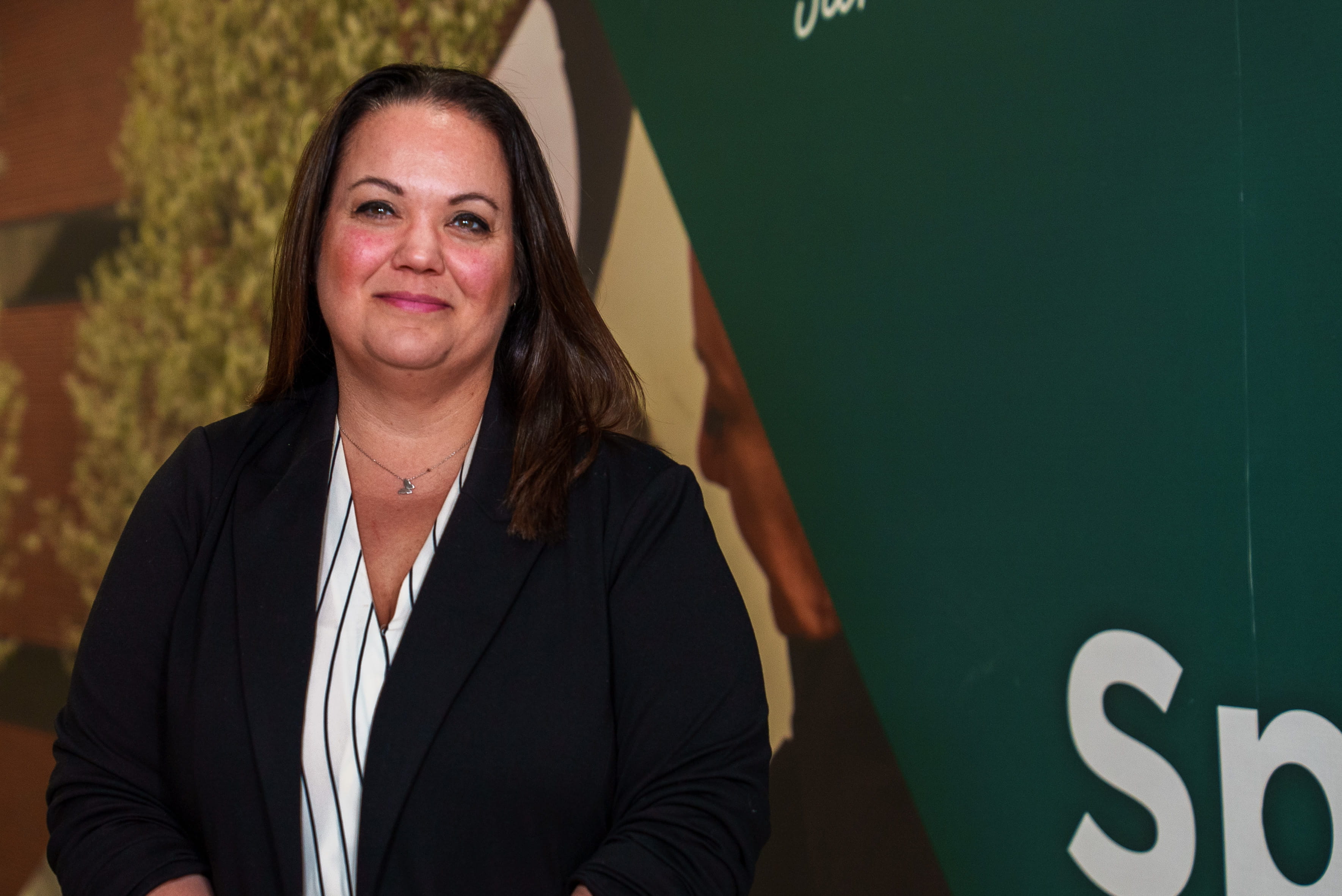
Kim Pfotenhauer, D.O., assistant dean for Clerkship Education and associate professor of Family Medicine at MSUCOM, is part of a research team examining both the shortcomings and interventions needed to address obesity education as part of an ongoing long-term project.
Their initial findings have been published in the Medical Science Educator, “Uncovering Gaps in Obesity Medicine Competencies: Insights from Ten U.S. Medical Schools.”
“We really think about obesity now more as a disease rather than just a risk factor,” said Dr. Pfotenhauer, who has also been certified as a Diplomate of the American Board of Obesity Medicine (DABOM), a designation for doctors with specialized training in treating obesity and its related conditions.
“The medical profession has only recognized obesity as a disease since 2013, which really isn’t that long ago,” Dr. Pfotenhauer explained. “Students, no matter what specialty they go into, are going to need to know about obesity, how to treat it and how it affects their area of medicine and their specialty.”
The American Medical Association (AMA), the Association of American Medical Colleges (AAMC), the American Association of Colleges of Osteopathic Medicine and current medical providers all recognize the urgency of improving obesity education in the medical school curriculum, particularly since obesity is one of the most common noncommunicable diseases worldwide.
According to Dr. Pfotenhauer’s article, obesity is associated “with significant morbidity and mortality and linked to over 200 medical complications and comorbidities, including type 2 diabetes, heart disease, metabolic dysfunction-associated steatotic liver disease and some forms of cancer.”
The Obesity Medicine Education Collaborative (OMEC) supports undergraduate and graduate medical training programs through the assessment of 36 different competencies in six different groups: patient care and procedural skills; medical knowledge; practice-based learning and improvement; interpersonal and communication skills; professionalism; and systems-based practice. These 36 competencies provide a framework for obesity education and are designed to improve provider skills in assessing, preventing, and treating obesity.
The MSU College of Osteopathic Medicine was the only osteopathic medical school included in the first phase of the project.
“We joined a consortium of 10 different medical schools across the country,” Dr. Pfotenhauer said. “This is the first part of a larger project that looked at a needs assessment of the gaps in our curriculum. We used these obesity competencies to determine, are we meeting them? Do we have these areas of study in our curriculum?
“What we found,” she continued, “is that in most medical schools, it's piecemeal throughout the curriculum. So, some of it is here, some of it is there. Some competencies we do well, like medical knowledge. Others were really lacking. The two that were the biggest and are often the most difficult are practice-based learning and improvement, as well as systems-based practice.”
Competencies under the medical knowledge domain are generally covered in the first two years of didactic training in the classroom and focus on the science of obesity, comorbidities and nutritional/pharmacological management. Competencies learned during clinical rotations in the second two years of medical school fall under practice-based learning and systems-based practice. These involve standards for evidence-based practice, lifelong learning, team-based care, environmental factors and more.
Overcoming the stigma of obesity
According to the Centers for Disease Control and Prevention (CDC) about 40% of adults in the U.S. have obesity, while more than 9% suffer from severe obesity, based on August 2021-August 2023 data. Obesity is defined as a Body Mass Index or BMI of 30 or higher. Despite the prevalence of obesity, medical students – and many doctors as well – are hesitant to bring up the subject of obesity with their patients. This reluctance may stem from not wanting to offend patients, and many patients don’t like to talk about it either.
Dr. Pfotenhauer acknowledges the problem exists but says the MSU College of Osteopathic Medicine teaches different approaches to students that emphasize non-bias and shared decision-making in patient care.
“It begins with setting up an inclusive and non-biased environment, so having a chair for every size, a table for every size, not weighing patients in the middle of the hallway, etc. Those are some things that students may or may not be able to control at this point, but they can going forward when they have an office.”
Open-ended communication is key, Dr. Pfotenhauer said, which means “talking about what your concerns or needs are as a patient and what my concerns are as a physician.”
“Approaching it in that non-biased way means saying something like, ‘weight is something that I'm concerned about,’” Dr. Pfotenhauer said. “‘Is that something that you wanted to talk about today?’ And if they say yes, then we start to approach it by asking what their concerns are first. And if they say no, it’s important to just leave the door open and say, ‘Okay, that's fine, but I'm here when you're ready to talk.’”
Medical education recognizes, too, that obesity is a complex disease that is affected by a lot of different factors. It’s much more complicated than eating less and exercising more. Hypertension, high cholesterol and other factors offer other ways to approach a patient discussion.
For example, a doctor might tell a patient that one of the things that can impact hypertension is lifestyle, which can affect weight as well. Talking about what lifestyle changes the patient may be able to make or how to set goals can stimulate communication. SMART (specific, measurable, attainable, realistic and timely) goals can be especially effective.
“What I like to teach is having patients set their own SMART goals,” Dr. Pfotenhauer said. “It's different than saying, ‘Exercise more.’ Because maybe they say they don't have time to exercise, but perhaps they can begin just by including a vegetable at every meal, or make other changes to their diet, or start walking 30 minutes two times a week. And that's more realistic for them than going out and joining a gym. SMART goals are very measurable, so the patient can set a specific goal, then say, ‘Okay, I've checked that off,’ or ‘I've made improvements,’ before they re-adjust and increase the goals they’ve set.”
Future phases of the obesity education project will focus on interventions and outcomes. Dr. Pfotenhauer said a few areas where intervention was needed have already been identified and implemented at MSUCOM to improve its obesity education curriculum.
"Two learning experiences have been integrated into the first-year curriculum and one into the third-year curriculum,” she said. “During the first year, students engage in case-based learning within both the endocrine systems course and their clinical skills course. In the third year, students work through clinical cases during didactic sessions conducted at their respective base hospitals. Initial feedback from students has been very positive. We anticipate expanding this content further in the near future.”
A long-term goal of the project is to also create a repository of modules and materials for other medical educators who hope to duplicate the curriculum improvements in their schools, an effort supported by the Obesity Society.
“Students want more obesity education, and they want to do it well,” Dr. Pfotenhauer said. “I think it's very timely, since obesity is finally being recognized for being a disease that has its own risk factors, rather than just a risk factor that contributes to other diseases.”
by Lynn Waldsmith
Results of a new study that examined curricula and surveyed students at 10 medical schools – including the Michigan State University College of Osteopathic Medicine (MSUCOM) – found that medical students need improved obesity education to meet the complex needs of patients.
Kim Pfotenhauer, D.O., assistant dean for Clerkship Education and associate professor of Family Medicine at MSUCOM, is part of a research team examining both the shortcomings and interventions needed to address obesity education as part of an ongoing long-term project.
Their initial findings have been published in the Medical Science Educator, “Uncovering Gaps in Obesity Medicine Competencies: Insights from Ten U.S. Medical Schools.”
“We really think about obesity now more as a disease rather than just a risk factor,” said Dr. Pfotenhauer, who has also been certified as a Diplomate of the American Board of Obesity Medicine (DABOM), a designation for doctors with specialized training in treating obesity and its related conditions.
“The medical profession has only recognized obesity as a disease since 2013, which really isn’t that long ago,” Dr. Pfotenhauer explained. “Students, no matter what specialty they go into, are going to need to know about obesity, how to treat it and how it affects their area of medicine and their specialty.”
The American Medical Association (AMA), the Association of American Medical Colleges (AAMC), the American Association of Colleges of Osteopathic Medicine and current medical providers all recognize the urgency of improving obesity education in the medical school curriculum, particularly since obesity is one of the most common noncommunicable diseases worldwide.
According to Dr. Pfotenhauer’s article, obesity is associated “with significant morbidity and mortality and linked to over 200 medical complications and comorbidities, including type 2 diabetes, heart disease, metabolic dysfunction-associated steatotic liver disease and some forms of cancer.”
The Obesity Medicine Education Collaborative (OMEC) supports undergraduate and graduate medical training programs through the assessment of 36 different competencies in six different groups: patient care and procedural skills; medical knowledge; practice-based learning and improvement; interpersonal and communication skills; professionalism; and systems-based practice. These 36 competencies provide a framework for obesity education and are designed to improve provider skills in assessing, preventing, and treating obesity.
The MSU College of Osteopathic Medicine was the only osteopathic medical school included in the first phase of the project.
“We joined a consortium of 10 different medical schools across the country,” Dr. Pfotenhauer said. “This is the first part of a larger project that looked at a needs assessment of the gaps in our curriculum. We used these obesity competencies to determine, are we meeting them? Do we have these areas of study in our curriculum?
“What we found,” she continued, “is that in most medical schools, it's piecemeal throughout the curriculum. So, some of it is here, some of it is there. Some competencies we do well, like medical knowledge. Others were really lacking. The two that were the biggest and are often the most difficult are practice-based learning and improvement, as well as systems-based practice.”
Competencies under the medical knowledge domain are generally covered in the first two years of didactic training in the classroom and focus on the science of obesity, comorbidities and nutritional/pharmacological management. Competencies learned during clinical rotations in the second two years of medical school fall under practice-based learning and systems-based practice. These involve standards for evidence-based practice, lifelong learning, team-based care, environmental factors and more.
Overcoming the stigma of obesity
According to the Centers for Disease Control and Prevention (CDC) about 40% of adults in the U.S. have obesity, while more than 9% suffer from severe obesity, based on August 2021-August 2023 data. Obesity is defined as a Body Mass Index or BMI of 30 or higher. Despite the prevalence of obesity, medical students – and many doctors as well – are hesitant to bring up the subject of obesity with their patients. This reluctance may stem from not wanting to offend patients, and many patients don’t like to talk about it either.
Dr. Pfotenhauer acknowledges the problem exists but says the MSU College of Osteopathic Medicine teaches different approaches to students that emphasize non-bias and shared decision-making in patient care.
“It begins with setting up an inclusive and non-biased environment, so having a chair for every size, a table for every size, not weighing patients in the middle of the hallway, etc. Those are some things that students may or may not be able to control at this point, but they can going forward when they have an office.”
Open-ended communication is key, Dr. Pfotenhauer said, which means “talking about what your concerns or needs are as a patient and what my concerns are as a physician.”
“Approaching it in that non-biased way means saying something like, ‘weight is something that I'm concerned about,’” Dr. Pfotenhauer said. “‘Is that something that you wanted to talk about today?’ And if they say yes, then we start to approach it by asking what their concerns are first. And if they say no, it’s important to just leave the door open and say, ‘Okay, that's fine, but I'm here when you're ready to talk.’”
Medical education recognizes, too, that obesity is a complex disease that is affected by a lot of different factors. It’s much more complicated than eating less and exercising more. Hypertension, high cholesterol and other factors offer other ways to approach a patient discussion.
For example, a doctor might tell a patient that one of the things that can impact hypertension is lifestyle, which can affect weight as well. Talking about what lifestyle changes the patient may be able to make or how to set goals can stimulate communication. SMART (specific, measurable, attainable, realistic and timely) goals can be especially effective.
“What I like to teach is having patients set their own SMART goals,” Dr. Pfotenhauer said. “It's different than saying, ‘Exercise more.’ Because maybe they say they don't have time to exercise, but perhaps they can begin just by including a vegetable at every meal, or make other changes to their diet, or start walking 30 minutes two times a week. And that's more realistic for them than going out and joining a gym. SMART goals are very measurable, so the patient can set a specific goal, then say, ‘Okay, I've checked that off,’ or ‘I've made improvements,’ before they re-adjust and increase the goals they’ve set.”
Future phases of the obesity education project will focus on interventions and outcomes. Dr. Pfotenhauer said a few areas where intervention was needed have already been identified and implemented at MSUCOM to improve its obesity education curriculum.
"Two learning experiences have been integrated into the first-year curriculum and one into the third-year curriculum,” she said. “During the first year, students engage in case-based learning within both the endocrine systems course and their clinical skills course. In the third year, students work through clinical cases during didactic sessions conducted at their respective base hospitals. Initial feedback from students has been very positive. We anticipate expanding this content further in the near future.”
A long-term goal of the project is to also create a repository of modules and materials for other medical educators who hope to duplicate the curriculum improvements in their schools, an effort supported by the Obesity Society.
“Students want more obesity education, and they want to do it well,” Dr. Pfotenhauer said. “I think it's very timely, since obesity is finally being recognized for being a disease that has its own risk factors, rather than just a risk factor that contributes to other diseases.”
by Lynn Waldsmith