
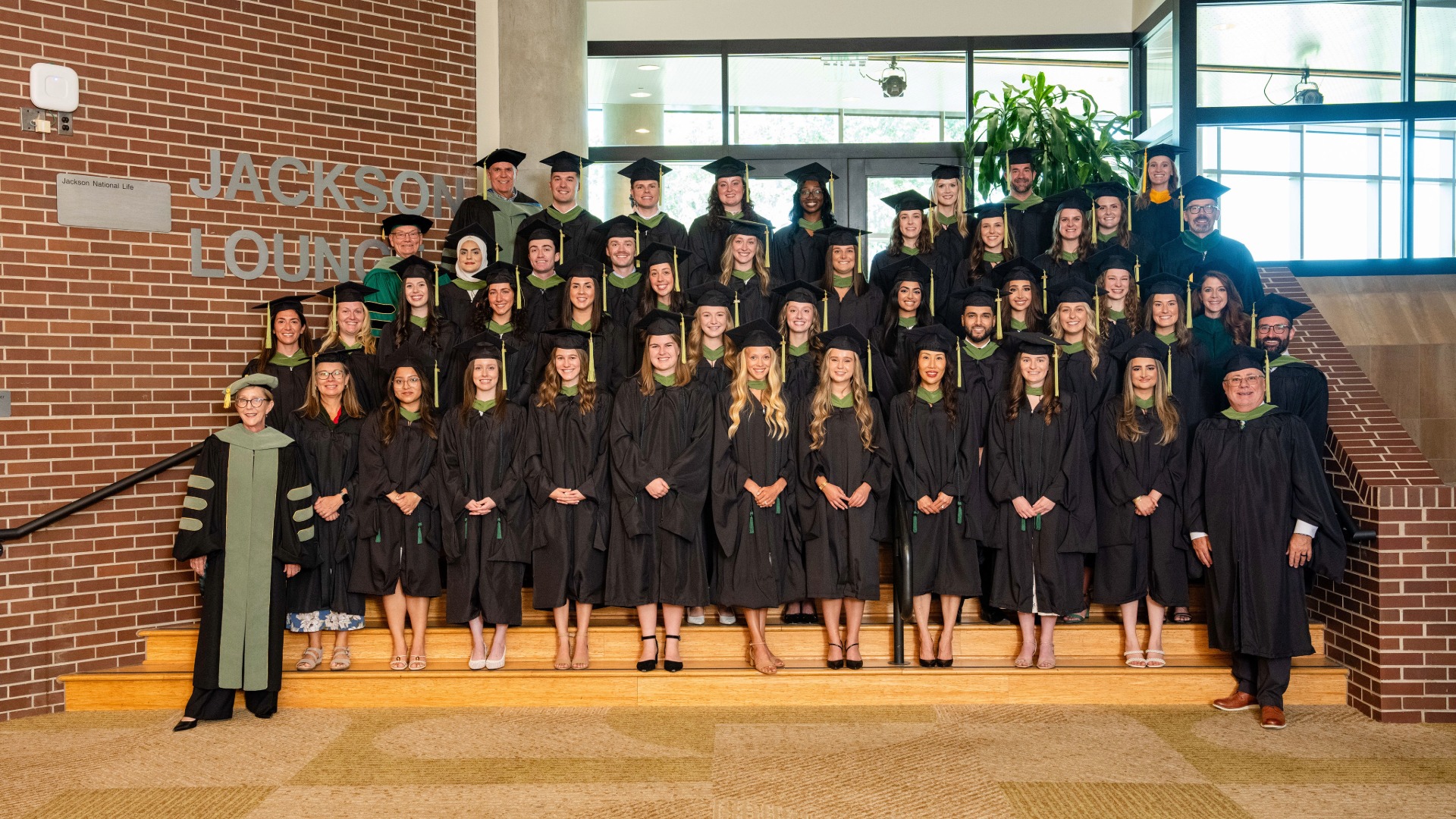
On August 23, the Michigan State University College of Osteopathic Medicine (MSUCOM) PA Medicine Program Class of 2026 logged their last milestone at the college – commencement.
The class of 35 received recognition from program and college leadership as they gathered to remember their time in the program and look toward the future.
MSUCOM Dean Joyce deJong, D.O., challenged graduates to think about the person they choose to become through the countless small decisions that make up a career. “You do not have to figure out your entire career today,” she said. “You just have to make the next good choice, and then the next one. Over time, those choices become habits, habits shape character, character builds your reputation and reputation earns trust. Your diploma tells the world what you have achieved. Your choices will tell the world who you are.”
Of the PA Class of 2026, 52% have already accepted positions with 76% of those roles in Michigan. During their time at MSU, the MSU College of Osteopathic Medicine PA Medicine Class of 2026 logged 56,992 patient encounters and a total of 784 hours of community service. Something extraordinary, according to PA Medicine Program Director John McGinnity, PA-C, M.S.
McGinnity reminded the graduates and their families that when the journey began in June 2024, he told them all, “we would train them to take care of our families. I’m here to tell you they have done that,” McGinnity said. “In the year they were in clinicals they saw 56,992 patients. Think about that and your impact on people’s lives. You impacted nearly 57,000 lives.
“You’re more than ready.”
During the next few months, these PAs will take their national board exam and prepare for their future patients. The PA Medicine Program at Michigan State University is a 27-month program resulting in the presenting of the Master of Science in PA Medicine degree.
Adam Storts, MS, PA-C, assistant professor at the MSUCOM PA Medicine Program, and keynote speaker for this year’s PA commencement ceremony, told the group that teaching them the practice of medicine is in a lot of ways easy, but on this day, he was there to motivate them.
“Learning how to evaluate clinical evidence, adapt to new information, and continuously refine your practice. Those experiences were not simply requirements for graduation; they were training in the discipline of preparation,” he said, adding, “Stay committed to this. Continue learning. Continue improving. Do that consistently, and you will become the clinician who recognizes the diagnosis others miss, the colleague others seek out for guidance, and the teammate others trust when things become difficult.”
by Terri Hughes-Lazzell
On August 23, the Michigan State University College of Osteopathic Medicine (MSUCOM) PA Medicine Program Class of 2026 logged their last milestone at the college – commencement.
The class of 35 received recognition from program and college leadership as they gathered to remember their time in the program and look toward the future.
MSUCOM Dean Joyce deJong, D.O., challenged graduates to think about the person they choose to become through the countless small decisions that make up a career. “You do not have to figure out your entire career today,” she said. “You just have to make the next good choice, and then the next one. Over time, those choices become habits, habits shape character, character builds your reputation and reputation earns trust. Your diploma tells the world what you have achieved. Your choices will tell the world who you are.”
Of the PA Class of 2026, 52% have already accepted positions with 76% of those roles in Michigan. During their time at MSU, the MSU College of Osteopathic Medicine PA Medicine Class of 2026 logged 56,992 patient encounters and a total of 784 hours of community service. Something extraordinary, according to PA Medicine Program Director John McGinnity, PA-C, M.S.
McGinnity reminded the graduates and their families that when the journey began in June 2024, he told them all, “we would train them to take care of our families. I’m here to tell you they have done that,” McGinnity said. “In the year they were in clinicals they saw 56,992 patients. Think about that and your impact on people’s lives. You impacted nearly 57,000 lives.
“You’re more than ready.”
During the next few months, these PAs will take their national board exam and prepare for their future patients. The PA Medicine Program at Michigan State University is a 27-month program resulting in the presenting of the Master of Science in PA Medicine degree.
Adam Storts, MS, PA-C, assistant professor at the MSUCOM PA Medicine Program, and keynote speaker for this year’s PA commencement ceremony, told the group that teaching them the practice of medicine is in a lot of ways easy, but on this day, he was there to motivate them.
“Learning how to evaluate clinical evidence, adapt to new information, and continuously refine your practice. Those experiences were not simply requirements for graduation; they were training in the discipline of preparation,” he said, adding, “Stay committed to this. Continue learning. Continue improving. Do that consistently, and you will become the clinician who recognizes the diagnosis others miss, the colleague others seek out for guidance, and the teammate others trust when things become difficult.”
by Terri Hughes-Lazzell