
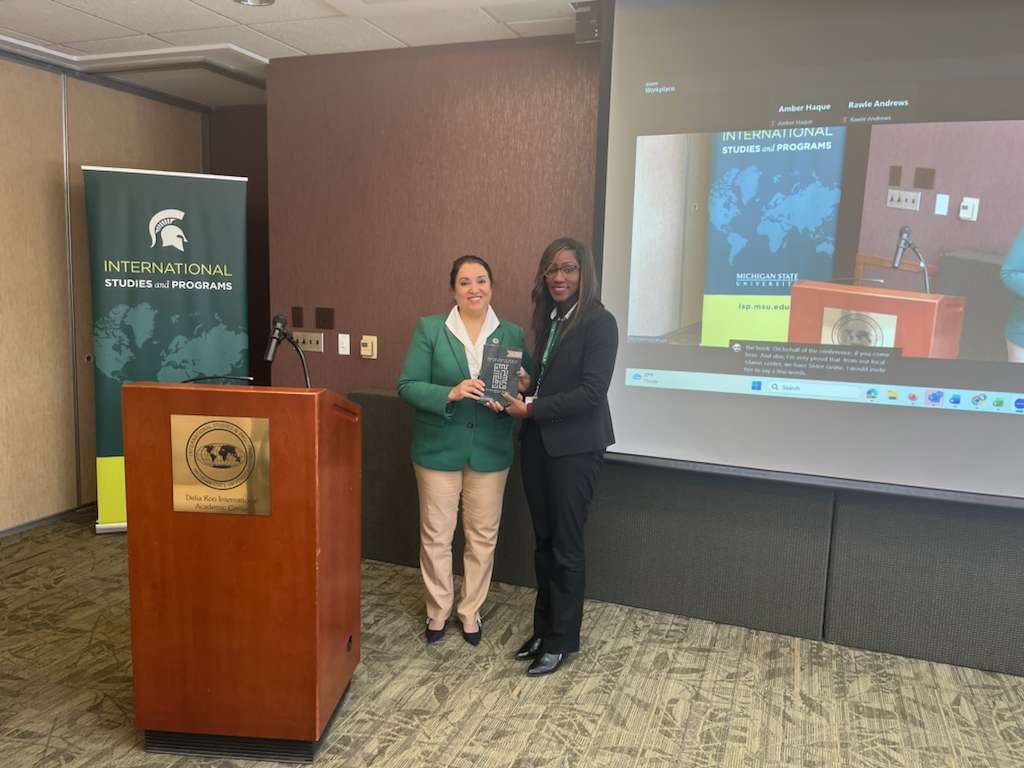
Bringing better awareness and acceptance to the Muslim community through cultural psychiatry and teaching cultural appropriate care for Muslim patients has been a focus for years for Farha Abbasi, M.D., associate professor in the Department of Psychiatry at the Michigan State University College of Osteopathic Medicine (MSUCOM) and director of the Muslim Mental Health Consortium at MSU.
Working with the Muslim American community, Dr. Abbasi encourages building bridges and integration into mainstream society. Her work as a psychiatrist also led her to establishing the Annual Muslim Mental Health Conference in 2008 and later launching a Global Muslim mental Health Conference in Malaysia and Jordan.
Now, she has used her experience and worked with the books co-editor, Amber Haque, Ph.D., associate professor in the Department of Psychiatry at UAE University in Al Ain, United Arab Emirates, to publish “Muslim Mental Health in North America.” The book is primarily the result of the 17 years of the annual Muslim Mental Health conferences organized and supported by the Department of Psychiatry at Michigan State University and is self-published by the Muslim Mental Health Consortium (MMHC), based at MSU.
“'Muslim Mental Health in North America’ is the first comprehensive edited book to address essential topics that have rarely been discussed in detail by experts from diverse backgrounds, including academics, researchers, practitioners and executives. The goal of bringing these experts together was to leverage their firsthand experience and provide valuable insights,” said Dr. Abbasi, adding the book’s interdisciplinary approach with contributions from psychiatrists, clinical psychologists and social workers make it a trusted resource.
“Many Muslims face mental health challenges and often struggle to speak openly about their experiences, resilience, spirituality and strengths,” she added. “This book is a testament of what can be achieved by an academic institution like MSU and community partnership and serves as a crucial resource, offering coherence and legitimacy to the emerging field of Muslim mental health. It bridges the gap between research and practice while providing a roadmap for the future.”
In addition to being co-editor of the book, Dr. Abbasi also authored the chapter on the annual Muslim Mental Health Conference. The book is a collection of research and reflections on mental health issues Muslim Americans face with topics discussed by 40 authors in an academic context and is a valuable resource for those who are interested in cultural understanding and culturally sensitive practices when working with Muslims, as well as those struggling with mental health challenges and their families and friends, she said.
Dr. Abbasi’s pioneering work at Michigan State University have brought global and national attention to Muslim mental health. She has received numerous awards and serves on many boards and committees, including as chair of the Mental Health Task Force for the Mayor of Lansing.
Bringing better awareness and acceptance to the Muslim community through cultural psychiatry and teaching cultural appropriate care for Muslim patients has been a focus for years for Farha Abbasi, M.D., associate professor in the Department of Psychiatry at the Michigan State University College of Osteopathic Medicine (MSUCOM) and director of the Muslim Mental Health Consortium at MSU.
Working with the Muslim American community, Dr. Abbasi encourages building bridges and integration into mainstream society. Her work as a psychiatrist also led her to establishing the Annual Muslim Mental Health Conference in 2008 and later launching a Global Muslim mental Health Conference in Malaysia and Jordan.
Now, she has used her experience and worked with the books co-editor, Amber Haque, Ph.D., associate professor in the Department of Psychiatry at UAE University in Al Ain, United Arab Emirates, to publish “Muslim Mental Health in North America.” The book is primarily the result of the 17 years of the annual Muslim Mental Health conferences organized and supported by the Department of Psychiatry at Michigan State University and is self-published by the Muslim Mental Health Consortium (MMHC), based at MSU.
“'Muslim Mental Health in North America’ is the first comprehensive edited book to address essential topics that have rarely been discussed in detail by experts from diverse backgrounds, including academics, researchers, practitioners and executives. The goal of bringing these experts together was to leverage their firsthand experience and provide valuable insights,” said Dr. Abbasi, adding the book’s interdisciplinary approach with contributions from psychiatrists, clinical psychologists and social workers make it a trusted resource.
“Many Muslims face mental health challenges and often struggle to speak openly about their experiences, resilience, spirituality and strengths,” she added. “This book is a testament of what can be achieved by an academic institution like MSU and community partnership and serves as a crucial resource, offering coherence and legitimacy to the emerging field of Muslim mental health. It bridges the gap between research and practice while providing a roadmap for the future.”
In addition to being co-editor of the book, Dr. Abbasi also authored the chapter on the annual Muslim Mental Health Conference. The book is a collection of research and reflections on mental health issues Muslim Americans face with topics discussed by 40 authors in an academic context and is a valuable resource for those who are interested in cultural understanding and culturally sensitive practices when working with Muslims, as well as those struggling with mental health challenges and their families and friends, she said.
Dr. Abbasi’s pioneering work at Michigan State University have brought global and national attention to Muslim mental health. She has received numerous awards and serves on many boards and committees, including as chair of the Mental Health Task Force for the Mayor of Lansing.