
Imagine being an impoverished child whose primary food source is cassava, a woody root vegetable that is toxic if not prepared properly. In some Sub-Saharan African countries families must grow cassava, gather their own firewood for cooking and retrieve water sometimes at a great distance. But they must also make a paste of this cassava by boiling and soaking it, then allowing it to dry in the sun for it to be safe to eat. During the months-long rainy season, it must be spread out indoors for drying, which takes longer because of the humidity.
Two Michigan State University College of Osteopathic Medicine (MSUCOM) professors from the Department of Psychiatry have devoted years to improve the nutritional and mental health of children and their mothers in Africa.
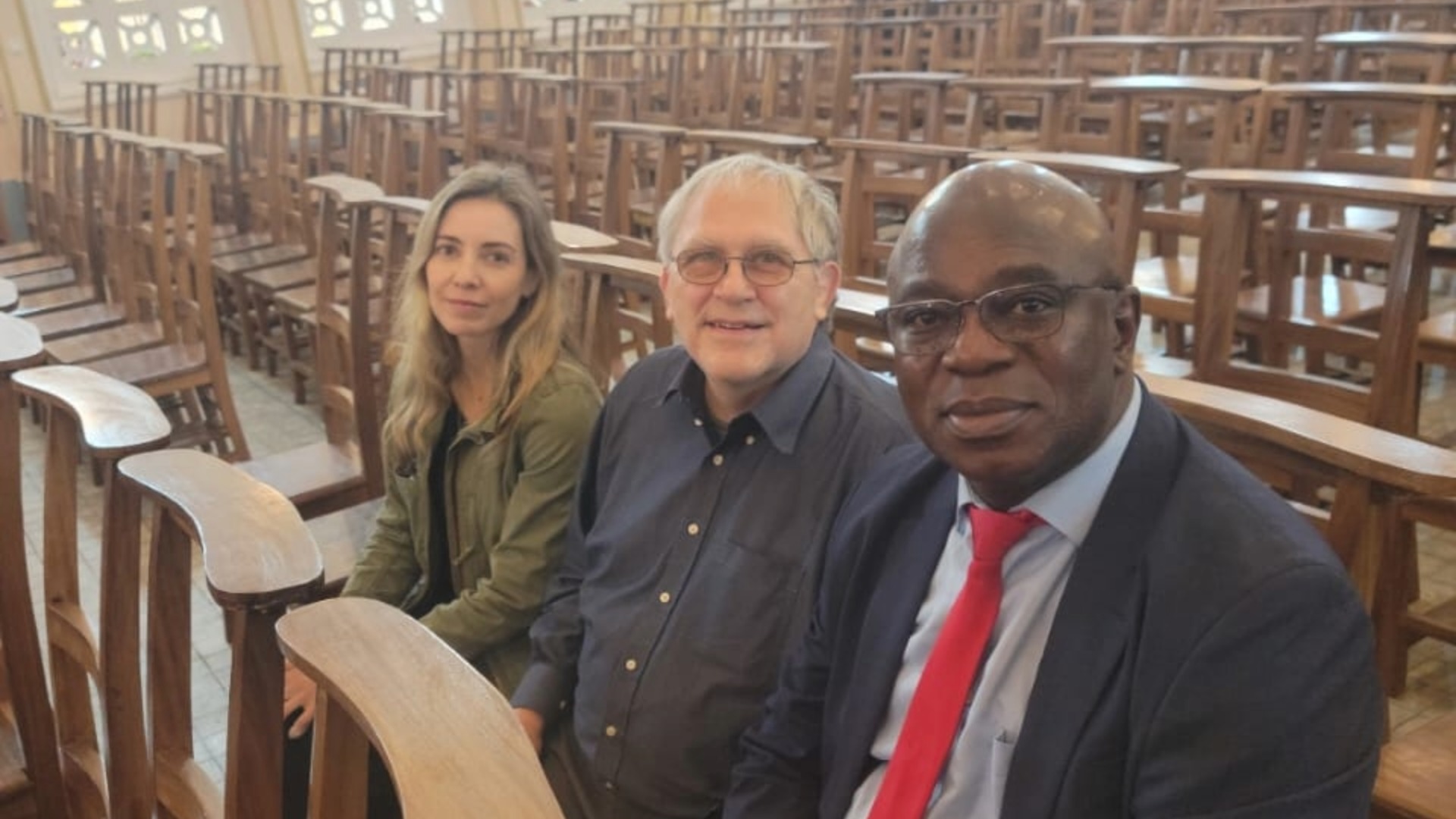
University Distinguished Professor Michael J. Boivin, Ph.D., and Associate Professor Itziar Familiar-Lopez, M.D., Ph.D., focused their first grant from the National Institute of Mental Health (NIMH) on teaching caregivers the benefits of the so-called “wetting method” to detoxify cassava, which lowers the risk of children developing konzo, a neurological disease caused by exposure to high levels of cyanide found in the vegetable.
“There's not only food insecurity, which is why they have to rely on toxic cassava,” Dr. Boivin said, “but these villages also have a water insecurity problem, and the wetting method is very labor-intensive. The problem is that caregivers understand its importance. They'll do it for a while, but then life gets in the way, like so many of our attempts at behavior change or reform.”
Better adherence to the wetting method to detoxify the cassava has been the foundation for this entire expanding research program. Drs. Boivin and Familiar-Lopez are now co-leading a $3.5M, five-year follow-up NIMH study in the Democratic Republic of Congo (DRC) to see whether strengthening caregiving practices early in life produces lasting mental health benefits as the infants and toddlers of that first study are now children who are reaching school age.
“We combined the wetting method intervention with follow-up training we call Mediational Intervention of Sensitizing Caregivers or MISC,” Dr. Boivin explained. “It’s a program to enhance responsive caregiving and promote children’s early cognitive and emotional development. While programs like MISC have demonstrated clear short-term benefits, much less is known about whether these early gains translate into sustained improvements in mental health as children grow older. We hope to close that gap with this project.”
Dr. Boivin has more than three decades of experience in child neurodevelopment research in Sub-Saharan Africa, while Dr. Familiar-Lopez contributes extensive expertise in maternal mental health, family systems and longitudinal global mental health research.
Their ongoing research was recently featured in an article published by the Alliance for African Partnership. Additionally, the article was posted on MalariaWorld, a free online scientific network for malaria professionals with 11,000 members from 140 countries. In-country leadership and partnership are also key to the project’s success.
“The MISC training stimulates child development and supports the mother by giving her agency in making decisions and some social-psychological support,” said Dr. Familiar-Lopez. “We know these types of programs work in the short term. We want to see if this training has had any impact long-term on children’s mental health and behaviors, but also on mothers’ mental health.”
The project, “Congolese mother and child mental health in response to early child development interventions,” is about halfway complete. Data collection from the same women and children in the previous study involves a combination of questionnaires for mothers and sophisticated eye tracking technology for their children.
The eye tracking software measures children’s eye movements as they are shown various images and videos of African children and their caregivers in happy, sad or neutral contexts. The team worked diligently with their research assistants in the Congo to screen and select images that were determined to be age and culturally appropriate.
Dr. Boivin also said some of the more universal images pertain to spirituality, such as African children in postures of prayer or lifting their hands to the sky.
“To have somehow overlooked or omitted that, just because it’s maybe not always favored within the scientific community, would be a mistake,” he said. “That we've been able to extend that domain of assessment as it might relate to mental health within an area of the world where spirituality is an important part of everyday life is significant.”
Barbara Thompson, Ph.D., an assistant professor in the MSU College of Human Medicine's Department of Pediatrics and Human Development, is supporting the project through her expertise in using eye-tracking technology to analyze mother-child relationships.
The next step will be examining how the eye tracking measures relate to caregiver reports on how their children are doing in terms of psychosocial well-being and adjustment.
According to Dr. Boivin, the project’s eye-tracking technology is pioneering a whole new assessment field related to mental health.
“This is not just eye-tracking data pertaining to neuro-ophthalmological or even basic neurocognitive responses to visual stimuli or visual tasks,” he said. “But it’s the first such data that really may provide a window into their emotional well-being. And we've established the feasibility to do this kind of assessment in resource-constrained settings with a field team in a remote area of the Democratic Republic of Congo. So, I think it could be done wherever these types of mental health measures are important for children in low- and middle-income countries globally.”
In fact, Dr. Familiar-Lopez is also working on a similar program in Guatemala.
“Early child stimulation for development works,” said Dr. Familiar-Lopez. “And in some countries – where there aren't any opportunities for children to access a structured learning environment, like preschools or nurseries – it becomes more important to implement these programs. Communities are very appreciative of these interventions and strengthening caregiver–child relationships early in life may be one of the most powerful tools we have to promote resilience, attachment, and positive mental health.”
by Lynn Waldsmith
Imagine being an impoverished child whose primary food source is cassava, a woody root vegetable that is toxic if not prepared properly. In some Sub-Saharan African countries families must grow cassava, gather their own firewood for cooking and retrieve water sometimes at a great distance. But they must also make a paste of this cassava by boiling and soaking it, then allowing it to dry in the sun for it to be safe to eat. During the months-long rainy season, it must be spread out indoors for drying, which takes longer because of the humidity.
Two Michigan State University College of Osteopathic Medicine (MSUCOM) professors from the Department of Psychiatry have devoted years to improve the nutritional and mental health of children and their mothers in Africa.
University Distinguished Professor Michael J. Boivin, Ph.D., and Associate Professor Itziar Familiar-Lopez, M.D., Ph.D., focused their first grant from the National Institute of Mental Health (NIMH) on teaching caregivers the benefits of the so-called “wetting method” to detoxify cassava, which lowers the risk of children developing konzo, a neurological disease caused by exposure to high levels of cyanide found in the vegetable.
“There's not only food insecurity, which is why they have to rely on toxic cassava,” Dr. Boivin said, “but these villages also have a water insecurity problem, and the wetting method is very labor-intensive. The problem is that caregivers understand its importance. They'll do it for a while, but then life gets in the way, like so many of our attempts at behavior change or reform.”
Better adherence to the wetting method to detoxify the cassava has been the foundation for this entire expanding research program. Drs. Boivin and Familiar-Lopez are now co-leading a $3.5M, five-year follow-up NIMH study in the Democratic Republic of Congo (DRC) to see whether strengthening caregiving practices early in life produces lasting mental health benefits as the infants and toddlers of that first study are now children who are reaching school age.
“We combined the wetting method intervention with follow-up training we call Mediational Intervention of Sensitizing Caregivers or MISC,” Dr. Boivin explained. “It’s a program to enhance responsive caregiving and promote children’s early cognitive and emotional development. While programs like MISC have demonstrated clear short-term benefits, much less is known about whether these early gains translate into sustained improvements in mental health as children grow older. We hope to close that gap with this project.”
Dr. Boivin has more than three decades of experience in child neurodevelopment research in Sub-Saharan Africa, while Dr. Familiar-Lopez contributes extensive expertise in maternal mental health, family systems and longitudinal global mental health research.
Their ongoing research was recently featured in an article published by the Alliance for African Partnership. Additionally, the article was posted on MalariaWorld, a free online scientific network for malaria professionals with 11,000 members from 140 countries. In-country leadership and partnership are also key to the project’s success.
“The MISC training stimulates child development and supports the mother by giving her agency in making decisions and some social-psychological support,” said Dr. Familiar-Lopez. “We know these types of programs work in the short term. We want to see if this training has had any impact long-term on children’s mental health and behaviors, but also on mothers’ mental health.”
The project, “Congolese mother and child mental health in response to early child development interventions,” is about halfway complete. Data collection from the same women and children in the previous study involves a combination of questionnaires for mothers and sophisticated eye tracking technology for their children.
The eye tracking software measures children’s eye movements as they are shown various images and videos of African children and their caregivers in happy, sad or neutral contexts. The team worked diligently with their research assistants in the Congo to screen and select images that were determined to be age and culturally appropriate.
Dr. Boivin also said some of the more universal images pertain to spirituality, such as African children in postures of prayer or lifting their hands to the sky.
“To have somehow overlooked or omitted that, just because it’s maybe not always favored within the scientific community, would be a mistake,” he said. “That we've been able to extend that domain of assessment as it might relate to mental health within an area of the world where spirituality is an important part of everyday life is significant.”
Barbara Thompson, Ph.D., an assistant professor in the MSU College of Human Medicine's Department of Pediatrics and Human Development, is supporting the project through her expertise in using eye-tracking technology to analyze mother-child relationships.
The next step will be examining how the eye tracking measures relate to caregiver reports on how their children are doing in terms of psychosocial well-being and adjustment.
According to Dr. Boivin, the project’s eye-tracking technology is pioneering a whole new assessment field related to mental health.
“This is not just eye-tracking data pertaining to neuro-ophthalmological or even basic neurocognitive responses to visual stimuli or visual tasks,” he said. “But it’s the first such data that really may provide a window into their emotional well-being. And we've established the feasibility to do this kind of assessment in resource-constrained settings with a field team in a remote area of the Democratic Republic of Congo. So, I think it could be done wherever these types of mental health measures are important for children in low- and middle-income countries globally.”
In fact, Dr. Familiar-Lopez is also working on a similar program in Guatemala.
“Early child stimulation for development works,” said Dr. Familiar-Lopez. “And in some countries – where there aren't any opportunities for children to access a structured learning environment, like preschools or nurseries – it becomes more important to implement these programs. Communities are very appreciative of these interventions and strengthening caregiver–child relationships early in life may be one of the most powerful tools we have to promote resilience, attachment, and positive mental health.”
by Lynn Waldsmith