
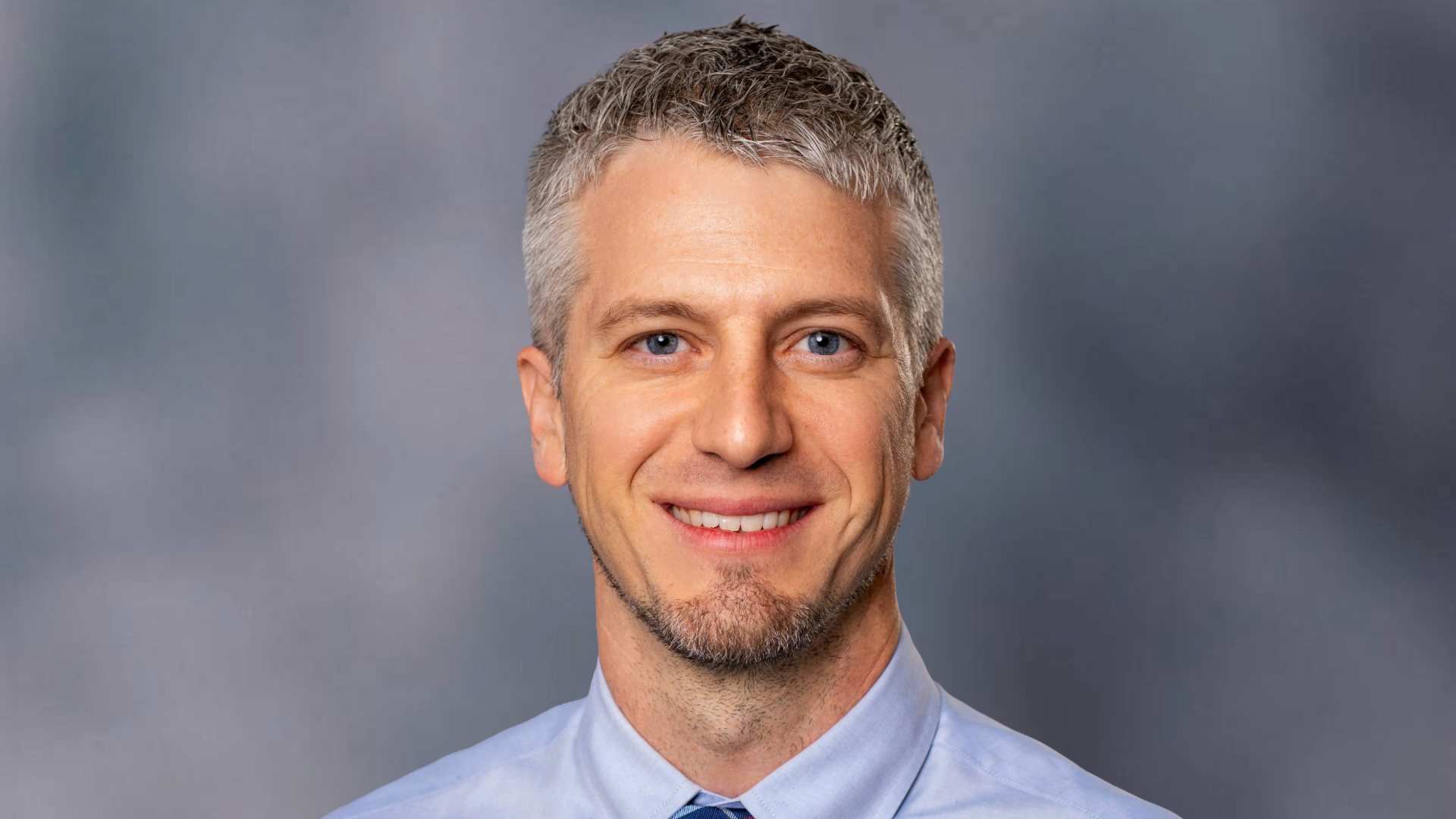
Travis Gordon, D.O., MSc, assistant professor of Osteopathic Manipulative Medicine (OMM) at the Michigan State University College of Osteopathic Medicine (MSUCOM) and a college alumnus, has been named a highly prestigious Fellow of the American Academy of Osteopathy (AAO). He will be formally honored and recognized at the awards banquet of the AAO Convocation in March of 2026 in Colorado Springs.
Dr. Gordon is Director of Medical Education for International Studies in Merida, Yucatan, Mexico, where he oversees international projects and collaborations between the Institute for Global Health at MSU and Merida, Mexico.
Dr. Gordon’s project application included his ongoing research on the use of OMM in the care of patients with bile acid diarrhea, a research effort that has welcomed MSUCOM student participation.
His project requirements involved research, publishable papers with peer review – which included two case studies (focusing on individual patients) and one case series (focusing on multiple patients) – several tests, an oral defense of his case studies and thesis of 30-plus pages. The arduous, 18-month process now behind him, Dr. Gordon has deservedly earned the title of Fellow of the American Academy of Osteopathy, or FAAO.
“It means more letters after my name,” he joked. But in truth the FAAO title is a designation for osteopathic physicians who have made significant contributions to the profession, an honor that he has worked towards for many years.
According to Dr. Gordon, there are more than 167,000 practicing osteopathic physicians in the United States, but only 82 active Fellows of the American Academy of Osteopathy (FAAOs).
“These are, essentially, the thinkers of the profession, the ones who want to take their specialty to the next level,” he said. “A lot of my osteopathic heroes, the true gurus in this profession, many of them are FAAOs. So, it was always very attractive to me. This also allows me to now interact with these people and learn even more. I see it as another opportunity for me to keep learning.”
While Dr. Gordon is the first to admit that diarrhea is not the most prestigious or illustrious topic in medicine to talk about, he says it is one of the most serious health problems of our time. Not because the incidence of bile acid diarrhea is necessarily increasing, although he says it may be because of poor diets largely consisting of processed foods, stress and other modern-day factors that contribute to the condition. What’s more likely, though, is that awareness and diagnosis of bile acid diarrhea are increasing because for so long it has been underdiagnosed or misdiagnosed, and patients are often reluctant to talk about it.
“In medical literature, bile acid diarrhea is becoming known as ‘the emerging epidemic,’” Dr. Gordon said. “I want to go to where there is need. I want to study what's relevant to patient care and human pathology. Functional diarrhea is not infectious, but we don't understand it very well and there haven’t been any actual sustainable solutions. Now we are using OMM to treat it very successfully. This is just one more reason why osteopathic medicine has so much to offer humanity.”
Successfully treating bile acid diarrhea with hands on treatment
Bile acids are made in the liver and stored in the gallbladder. They play a crucial role in digestion by breaking down food as it passes through the gut and helping to remove waste products. Excess bile acids, however, cause watery, urgent diarrhea.
There are three main types of bile acid diarrhea: Type 1 is caused by issues in the ileum, the final part of the small intestine, which normally reabsorbs bile acids. Crohn’s disease is a common example. Type 2 is “idiopathic,” meaning no clear reason exists; and Type 3 stems from all other gastrointestinal conditions. Post-cholecystectomy diarrhea is the most common cause in this category.
Some drugs can bind to and remove excess bile acids from the gut. Cholestyramine is most often prescribed for post-cholecystectomy diarrhea and can help reduce symptoms if taken regularly. Yet Dr. Gordon says to date there is nothing that permanently fixes the condition.
“They've looked at nutrition, they've looked at probiotics, they've looked at all these different things, but I don't really see any literature looking at the body itself,” he said. “If people develop bile acid diarrhea after surgery, then surgery likely had something to do with it. So, let’s look at how we can treat the body. Sometimes it has excessive traumas, and we need to very gently, as astute physicians, repair them. Then the body regulates itself and it's back in business.”
OMM involves gentle, non-invasive manipulations of the body's muscles, joints and connective tissue (fascia) to promote the body's natural healing mechanisms. The noninvasive hands-on treatment Dr. Gordon uses is a manual technique known as myofascial release, with which he essentially retraces the surgeon’s steps, gradually releasing all the tension surrounding the patient’s surgical scars throughout multiple layers of the abdominal wall and cavity.
Because surgeries are so common, Dr. Gordon has made surgical trauma a major focus of his osteopathic practice. He says he has treated at least 60 patients with bile acid diarrhea using OMM and nearly all have experienced total resolution.
In addition to his research on treating bile acid diarrhea with OMM, Dr. Gordon is leading a team at MSU in investigating the connection between C-section scar tissue adhesions and lower back pain.
“No one thinks of surgery as a big deal because all we usually see is a little thin scar, and we don't imagine what's going on inside,” Dr. Gordon said. “But what could be more traumatic to a human body than an abdominal surgery? Like any other trauma to the body, it affects our lymphatic system, nervous system, microvascular system, musculoskeletal system, etc. But clinical experience and our research are showing by treating abdominal surgical scars with gentle OMT techniques, the patient’s bile acid diarrhea will resolve nearly 100% in one to two sessions. It's truly amazing.”
by Lynn Waldsmith
Travis Gordon, D.O., MSc, assistant professor of Osteopathic Manipulative Medicine (OMM) at the Michigan State University College of Osteopathic Medicine (MSUCOM) and a college alumnus, has been named a highly prestigious Fellow of the American Academy of Osteopathy (AAO). He will be formally honored and recognized at the awards banquet of the AAO Convocation in March of 2026 in Colorado Springs.
Dr. Gordon is Director of Medical Education for International Studies in Merida, Yucatan, Mexico, where he oversees international projects and collaborations between the Institute for Global Health at MSU and Merida, Mexico.
Dr. Gordon’s project application included his ongoing research on the use of OMM in the care of patients with bile acid diarrhea, a research effort that has welcomed MSUCOM student participation.
His project requirements involved research, publishable papers with peer review – which included two case studies (focusing on individual patients) and one case series (focusing on multiple patients) – several tests, an oral defense of his case studies and thesis of 30-plus pages. The arduous, 18-month process now behind him, Dr. Gordon has deservedly earned the title of Fellow of the American Academy of Osteopathy, or FAAO.
“It means more letters after my name,” he joked. But in truth the FAAO title is a designation for osteopathic physicians who have made significant contributions to the profession, an honor that he has worked towards for many years.
According to Dr. Gordon, there are more than 167,000 practicing osteopathic physicians in the United States, but only 82 active Fellows of the American Academy of Osteopathy (FAAOs).
“These are, essentially, the thinkers of the profession, the ones who want to take their specialty to the next level,” he said. “A lot of my osteopathic heroes, the true gurus in this profession, many of them are FAAOs. So, it was always very attractive to me. This also allows me to now interact with these people and learn even more. I see it as another opportunity for me to keep learning.”
While Dr. Gordon is the first to admit that diarrhea is not the most prestigious or illustrious topic in medicine to talk about, he says it is one of the most serious health problems of our time. Not because the incidence of bile acid diarrhea is necessarily increasing, although he says it may be because of poor diets largely consisting of processed foods, stress and other modern-day factors that contribute to the condition. What’s more likely, though, is that awareness and diagnosis of bile acid diarrhea are increasing because for so long it has been underdiagnosed or misdiagnosed, and patients are often reluctant to talk about it.
“In medical literature, bile acid diarrhea is becoming known as ‘the emerging epidemic,’” Dr. Gordon said. “I want to go to where there is need. I want to study what's relevant to patient care and human pathology. Functional diarrhea is not infectious, but we don't understand it very well and there haven’t been any actual sustainable solutions. Now we are using OMM to treat it very successfully. This is just one more reason why osteopathic medicine has so much to offer humanity.”
Successfully treating bile acid diarrhea with hands on treatment
Bile acids are made in the liver and stored in the gallbladder. They play a crucial role in digestion by breaking down food as it passes through the gut and helping to remove waste products. Excess bile acids, however, cause watery, urgent diarrhea.
There are three main types of bile acid diarrhea: Type 1 is caused by issues in the ileum, the final part of the small intestine, which normally reabsorbs bile acids. Crohn’s disease is a common example. Type 2 is “idiopathic,” meaning no clear reason exists; and Type 3 stems from all other gastrointestinal conditions. Post-cholecystectomy diarrhea is the most common cause in this category.
Some drugs can bind to and remove excess bile acids from the gut. Cholestyramine is most often prescribed for post-cholecystectomy diarrhea and can help reduce symptoms if taken regularly. Yet Dr. Gordon says to date there is nothing that permanently fixes the condition.
“They've looked at nutrition, they've looked at probiotics, they've looked at all these different things, but I don't really see any literature looking at the body itself,” he said. “If people develop bile acid diarrhea after surgery, then surgery likely had something to do with it. So, let’s look at how we can treat the body. Sometimes it has excessive traumas, and we need to very gently, as astute physicians, repair them. Then the body regulates itself and it's back in business.”
OMM involves gentle, non-invasive manipulations of the body's muscles, joints and connective tissue (fascia) to promote the body's natural healing mechanisms. The noninvasive hands-on treatment Dr. Gordon uses is a manual technique known as myofascial release, with which he essentially retraces the surgeon’s steps, gradually releasing all the tension surrounding the patient’s surgical scars throughout multiple layers of the abdominal wall and cavity.
Because surgeries are so common, Dr. Gordon has made surgical trauma a major focus of his osteopathic practice. He says he has treated at least 60 patients with bile acid diarrhea using OMM and nearly all have experienced total resolution.
In addition to his research on treating bile acid diarrhea with OMM, Dr. Gordon is leading a team at MSU in investigating the connection between C-section scar tissue adhesions and lower back pain.
“No one thinks of surgery as a big deal because all we usually see is a little thin scar, and we don't imagine what's going on inside,” Dr. Gordon said. “But what could be more traumatic to a human body than an abdominal surgery? Like any other trauma to the body, it affects our lymphatic system, nervous system, microvascular system, musculoskeletal system, etc. But clinical experience and our research are showing by treating abdominal surgical scars with gentle OMT techniques, the patient’s bile acid diarrhea will resolve nearly 100% in one to two sessions. It's truly amazing.”
by Lynn Waldsmith